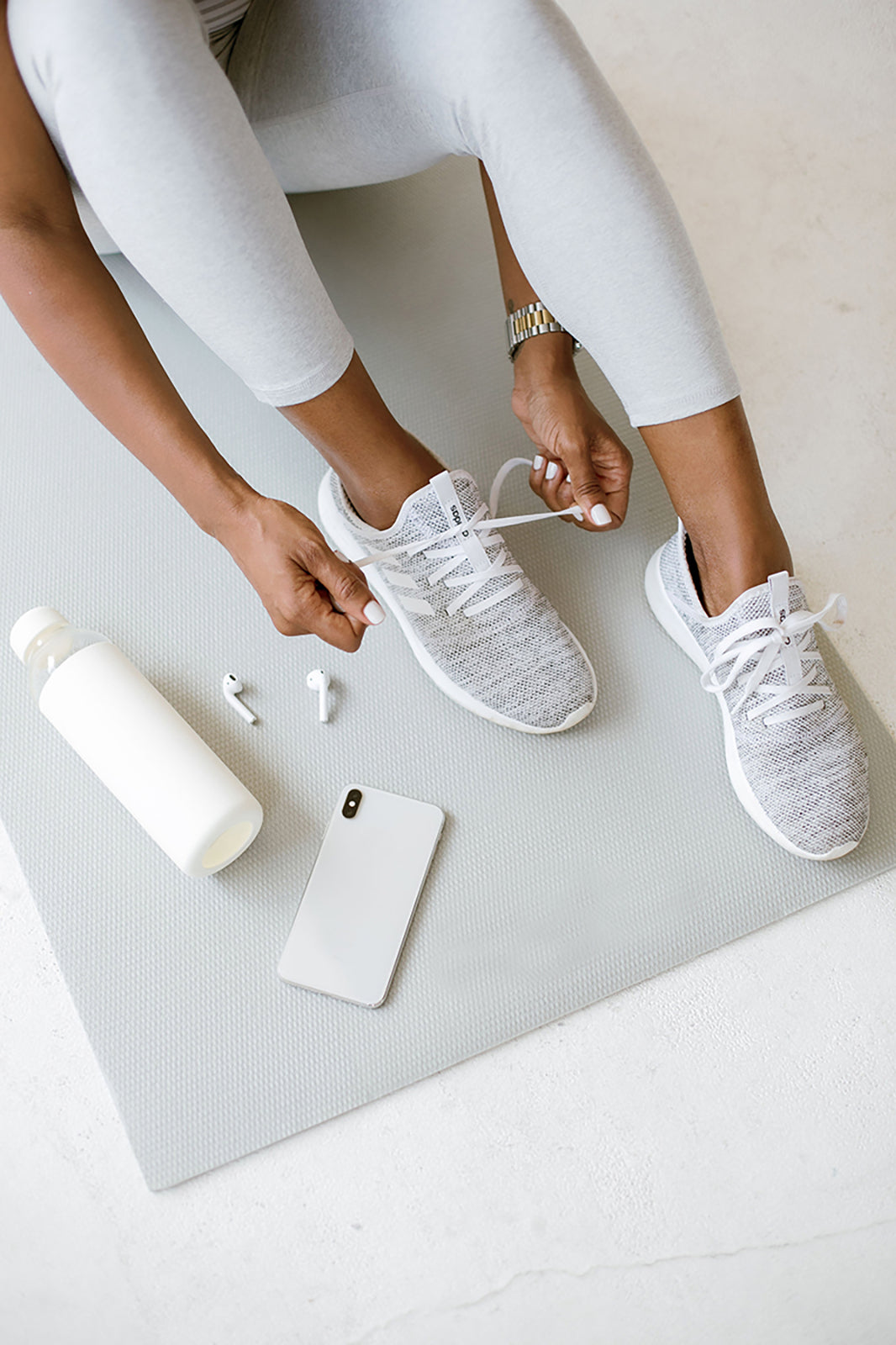

If you're new to lifting, the hardest part is showing up consistently. The good news: you don't need to live at the gym. A few well-planned sessions a week is enough to start seeing progress.
Written by Vita Globe Editorial Team | Reviewed against CDC and ACSM guidelines and systematic reviews of training frequency
How many days a week should a beginner lift weights?
Two to three days a week is a solid start. CDC guidelines call for muscle-strengthening activity on at least 2 days a week, working all major muscle groups[1], and ACSM recommends 2–3 days a week of whole-body training for novices[2]. Research suggests training each muscle about twice a week works well for muscle growth[3].
Caveat: Frequency studies mostly measure average results over weeks to months. Your best schedule is the one you can repeat week after week.
Sources: CDC · ACSM · Schoenfeld 2016 · Verified 2026-09-28
In this article
What do the guidelines recommend for beginners?
The CDC's adult guidelines recommend at least 2 days a week of muscle-strengthening activity that works the legs, hips, back, abdomen, chest, shoulders and arms[1]. ACSM's position stand on resistance training suggests novices train 2–3 days a week using whole-body routines, then add days or move to split routines as they progress[2].
Whole-body sessions make sense for beginners because each workout hits every major muscle group, so two or three sessions add up to a complete week.
Is lifting more often better?
Up to a point. A 2016 meta-analysis found that training a muscle group twice a week produced more growth than once a week[3]. For strength, a 2018 meta-analysis found that higher frequencies helped mainly because they allowed more total work; when weekly volume was matched, frequency itself made little difference[4].
In plain English: the total amount of quality work you do across the week matters most. For beginners, 2–3 sessions is usually enough to get that done without feeling wrecked.
How many sets should a beginner do?
A 2017 meta-analysis on weekly set volume found that moderate-to-higher weekly volumes produced greater strength gains than very low volumes[5]. For a beginner, that doesn't mean marathon sessions. Something like 2–3 sets of 8–12 reps for each of 5–6 exercises is a reasonable starting point, with the last couple of reps feeling challenging but controlled.
| Day | Plan |
|---|---|
| Monday | Whole-body A: squat, push-up or bench press, row, hip hinge, plank |
| Tuesday | Walk or rest |
| Wednesday | Whole-body B: lunge or step-up, overhead press, lat pulldown, glute bridge, carry |
| Thursday | Walk or rest |
| Friday | Whole-body A again |
| Weekend | Something active you enjoy, plus rest |
New to lifting or managing a health condition or injury? A qualified trainer or physical therapist can check your form and adjust exercises.
How do you make progress week to week?
ACSM's guidance centers on progressive overload: gradually increasing the challenge over time by adding a little weight, a rep or a set[2]. Keep a simple log so you know what to beat next time.
Recovery habits matter too. Sleep, enough protein and rest days are what let a beginner program keep working. Our guide on how many rest days you need explains more.
The honest summary
- 2–3 whole-body sessions a week is plenty for most beginners.
- Hitting each muscle about twice a week is a good target.
- Total weekly work matters more than the exact number of days.
- Small, steady increases beat big jumps.
Do beginners need supplements to build strength?
No. Training, food and sleep do the heavy lifting. That said, creatine monohydrate is one of the most-studied sports supplements and can support strength gains alongside training[6] for people who want to add it; see what creatine does and creatine for women for the research.
Our option
Vita Globe Performance & Recovery Duo
The Performance & Recovery Duo pairs Sugar-Free Creatine Gummies (creatine monohydrate; suggested use is four gummies once daily) with Vitamin B12 Gummies for Adults (1,000mcg of B12 per two-gummy serving). Every product in the bundle is tested by an independent third-party lab. It fits into the simple, same-every-day routine that beginners tend to stick with best.
Frequently asked questions
Is lifting twice a week enough?
Yes, especially at first. Two whole-body sessions meet the CDC's muscle-strengthening guideline and can build strength[1].
Should beginners lift every day?
It's usually unnecessary. ACSM suggests 2–3 days a week for novices[2], which leaves time to recover and makes the habit easier to keep.
Full body or split routine for beginners?
Full-body routines are the usual recommendation for beginners training 2–3 days a week[2]. Splits make more sense once you train 4 or more days.
How long should a beginner workout be?
Often 30–60 minutes is enough to complete 5–6 exercises for 2–3 sets each, including a warm-up.
Can I do cardio on my non-lifting days?
Yes. CDC also recommends 150 minutes of moderate aerobic activity weekly[1], and non-lifting days are a natural place for it.
Sources
- Centers for Disease Control and Prevention. Adult Activity: An Overview. Physical Activity Basics. cdc.gov
- American College of Sports Medicine. Progression models in resistance training for healthy adults (position stand). Med Sci Sports Exerc. 2009;41(3):687-708. doi:10.1249/MSS.0b013e3181915670
- Schoenfeld BJ, Ogborn D, Krieger JW. Effects of resistance training frequency on measures of muscle hypertrophy: a systematic review and meta-analysis. Sports Med. 2016;46(11):1689-1697. doi:10.1007/s40279-016-0543-8
- Grgic J, Schoenfeld BJ, Davies TB, Lazinica B, Krieger JW, Pedisic Z. Effect of resistance training frequency on gains in muscular strength: a systematic review and meta-analysis. Sports Med. 2018;48(5):1207-1220. doi:10.1007/s40279-018-0872-x
- Ralston GW, Kilgore L, Wyatt FB, Baker JS. The effect of weekly set volume on strength gain: a meta-analysis. Sports Med. 2017;47(12):2585-2601. doi:10.1007/s40279-017-0762-7
- Kreider RB, Kalman DS, Antonio J, Ziegenfuss TN, Wildman R, Collins R, et al. International Society of Sports Nutrition position stand: safety and efficacy of creatine supplementation in exercise, sport, and medicine. J Int Soc Sports Nutr. 2017;14:18. doi:10.1186/s12970-017-0173-z
About the Vita Globe Editorial Team
The Vita Globe Editorial Team researches and writes our wellness content, working from peer-reviewed research, systematic reviews and guidance from bodies such as the NIH and the FDA. We cite our sources inline and update articles when the evidence changes.
These statements have not been evaluated by the Food and Drug Administration. This product is not intended to diagnose, treat, cure, or prevent any disease. This article is for informational purposes only and is not a substitute for medical advice. Talk to your healthcare provider before starting any new supplement, particularly if you are pregnant, nursing, taking medication, or caring for a child.