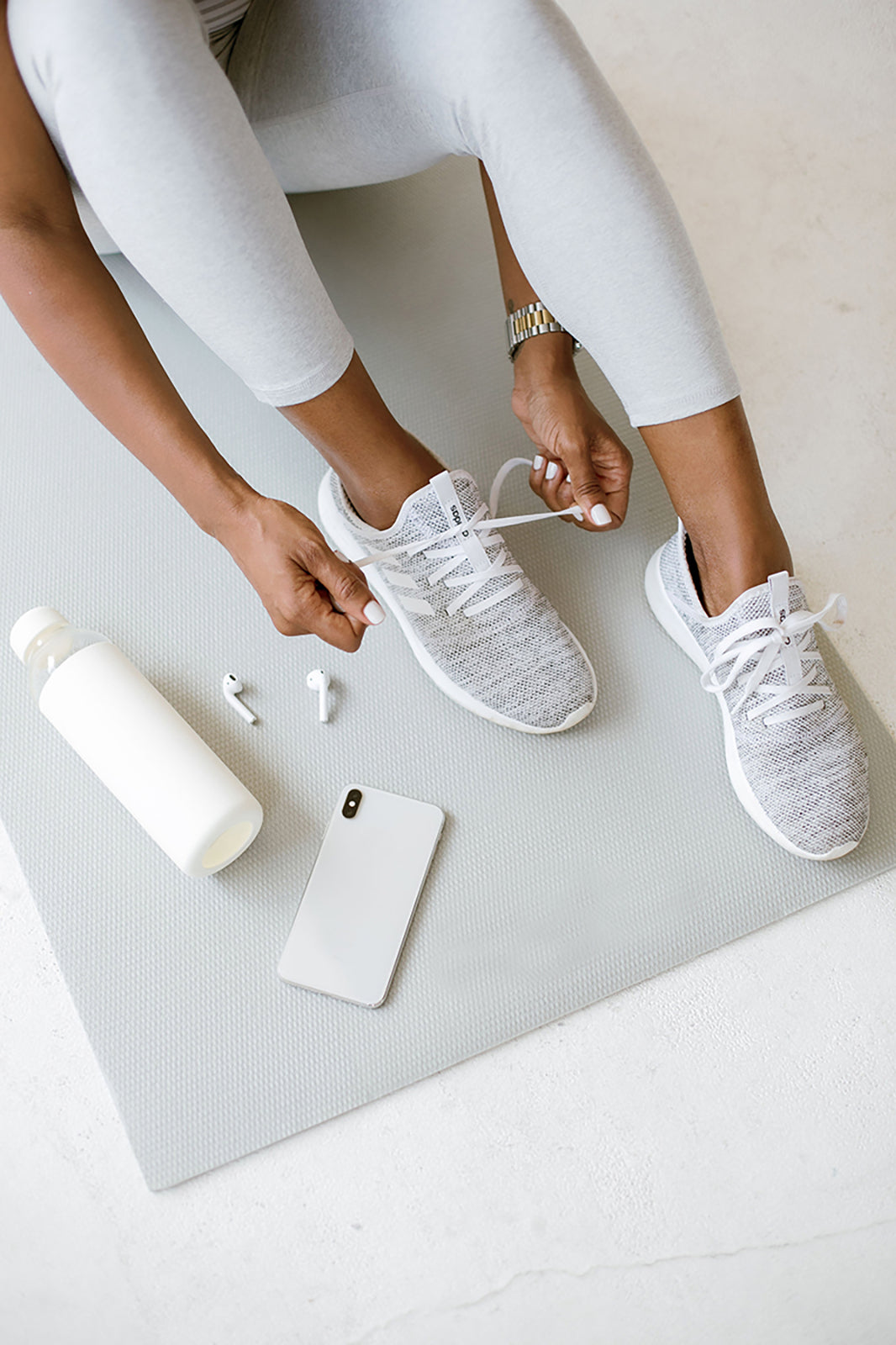

"Change your whole life overnight" is a myth — the actual research on habit formation says small, repeated actions are what stick, and even those take longer than most people expect. Here's what the science says about building habits that last.
Written by Vita Globe Editorial Team | Reviewed against peer-reviewed research and NIH guidance
How long does it actually take to build a new healthy habit?
New habits take a median of about 66 days to become automatic, with a wide range (18 to 254 days) depending on the behavior and the person[1]. The basics with the strongest evidence behind them are getting at least 150 minutes of moderate activity a week[2], sleeping 7 or more hours a night[3], and covering your total water needs — about 3.7 liters a day for men and 2.7 liters for women, from food and drinks combined[4]. Supplements can help fill specific dietary gaps, but they don't substitute for these fundamentals.
Caveat: The 66-day average hides wide individual variation — some habits took as little as 18 days to stick, others as long as 254 — so a single timeline won't fit everyone.
Sources: European Journal of Social Psychology 2010 · CDC Physical Activity Guidelines · CDC About Sleep · Verified 2026-09-06
IN THIS ARTICLE
Why small changes tend to outlast big overhauls
Most "total lifestyle overhaul" attempts fail for a simple reason: they ask for a large amount of willpower every single day, and willpower is a limited resource. Behavior-change research generally finds that habits — the kind of automatic behaviors that don't require active decision-making — form through repeated context-linked repetition, not motivation spikes. A small change (a glass of water each morning, a 10-minute walk) asks for less willpower up front, which is part of why it's more likely to survive a bad week than a full diet-and-exercise overhaul started all at once.
How long does it actually take to build a habit?
Longer than the popular "21 days" myth suggests. In a frequently cited study that tracked participants forming a daily habit (like drinking water or eating fruit) over 12 weeks, the behaviors that did become automatic took a median of 66 days to plateau — with a very wide individual range of 18 to 254 days[1]. Simple habits like drinking a glass of water formed faster (median 59 days); exercise, a more complex behavior, took longer (median 91 days) — and about half of participants in the study didn't show a clean, predictable habit-formation curve at all[1]. The practical takeaway isn't a specific day count — it's that automaticity takes months, not weeks, and missing a day here or there did not meaningfully derail habit formation in this data.
The honest summary
- There's no universal "21 days" or fixed number that applies to everyone.
- Plan on months of repetition, not weeks, especially for more complex habits like exercise.
- An occasional missed day is not shown to reset the process.
Hydration: what the evidence actually supports
The National Academies' adequate intake for total water — from all beverages and food combined — is about 3.7 liters (125 oz) a day for men and 2.7 liters (91 oz) a day for women; roughly 80% of that typically comes from drinks and 20% from food[4]. That's higher than the popular "eight glasses a day" rule of thumb, but it's a total that includes food moisture, not just water you drink straight.
One claim worth checking: that a morning glass of water "boosts your metabolism." A small 2003 study did find a temporary rise in energy expenditure after drinking cold water, driven partly by the body warming it to core temperature[5]. It's a real, measured effect — but it's modest and short-lived, and it hasn't translated into meaningful weight-loss results in follow-up research. Drink water because you need it for basic function, not as a metabolism hack.
Movement: how much do you actually need?
The CDC recommends at least 150 minutes of moderate-intensity activity a week (brisk walking counts) plus muscle-strengthening activity on 2 or more days a week[2]. That breaks down to about 22 minutes a day — closer to "a walk after dinner" than "an hour at the gym." Splitting activity into shorter chunks across the day counts toward the total just as well as one long session.
Sleep and stress: the most overlooked basics
The CDC recommends 7 or more hours of sleep a night for most adults[3]. Consistently getting less is linked to a higher risk of type 2 diabetes, heart disease, high blood pressure, weakened immune function, and impaired memory and concentration[3]. The CDC is also explicit that quality matters alongside quantity — consistent wake times and a wind-down routine tend to matter more than any single supplement or gadget.
Chronic stress compounds these effects: it disrupts sleep, and poor sleep in turn makes stress harder to regulate. A consistent bedtime, reduced screen time before bed, and basic stress-management practices (journaling, brief meditation, a short walk) are the interventions with the most consistent support — supplements aimed at sleep or stress are worth considering as an addition to those habits, not a replacement for them.
Where supplements fit in
None of the fundamentals above — hydration, movement, sleep, stress management, and balanced meals — require a supplement to work. Where supplements can help is filling specific, identifiable gaps: magnesium if your diet runs low on it, melatonin as a short-term aid for shifting your sleep schedule rather than a nightly requirement, ashwagandha if you want to try an adaptogen alongside (not instead of) stress-management habits, or a probiotic if you're working on gut health specifically. Treat them as a complement to the habit, not the habit itself.
A multivitamin is a different case — it's less about closing one specific gap and more of a general-coverage bet, and the research on who actually benefits is more mixed than the marketing suggests. Here's what the biggest trials actually found.
Our Option
Magnesium Citrate Gummies
A straightforward way to help close a magnesium gap if your diet runs light on leafy greens, nuts, and whole grains. Pair with our Ashwagandha Gummies if you're building a stress-management routine, or Melatonin Gummies for short-term help resetting your sleep schedule — not as a nightly requirement.
View Magnesium Citrate Gummies →View Ashwagandha Gummies →
Read: Ashwagandha for Stress — What the Research Actually Shows →
Frequently asked questions
Is it really true that habits take 21 days to form?
No — that number isn't well supported. The most-cited research on this found a median of 66 days, with a range of 18 to 254 days depending on the behavior and the person[1].
Does drinking water first thing in the morning boost metabolism?
There's a real, measured short-term rise in energy expenditure after drinking water, but it's modest and temporary, and hasn't been shown to produce meaningful weight change on its own[5]. Stay hydrated for the many other reasons your body needs it, not as a weight-loss shortcut.
Do I need to exercise for an hour to see benefits?
No. The CDC's baseline recommendation of 150 minutes a week works out to roughly 22 minutes a day, and it can be split into shorter sessions across the day[2].
What if I miss a day while building a new habit?
The habit-formation research that established the 66-day median also found that missing a single occasional day did not meaningfully disrupt the process[1]. Consistency over time matters more than a perfect streak.
Sources
- Lally P, van Jaarsveld CHM, Potts HWW, Wardle J. How are habits formed: Modelling habit formation in the real world. Eur J Soc Psychol. 2010;40(6):998-1009. doi:10.1002/ejsp.674
- Centers for Disease Control and Prevention. Physical Activity Guidelines for Adults. cdc.gov/physical-activity-basics/guidelines
- Centers for Disease Control and Prevention. About Sleep. cdc.gov/sleep/about
- National Academies of Sciences, Engineering, and Medicine. Dietary Reference Intakes for Water, Potassium, Sodium, Chloride, and Sulfate. 2004/2005.
- Boschmann M, Steiniger J, Hille U, et al. Water-induced thermogenesis. J Clin Endocrinol Metab. 2003;88(12):6015-6019. doi:10.1210/jc.2003-030780
About the Vita Globe Editorial Team
The Vita Globe Editorial Team researches and writes our wellness content, working from peer-reviewed research, systematic reviews and guidance from bodies such as the NIH and the FDA. We cite our sources inline and update articles when the evidence changes.
Read our editorial standards →Also available on Amazon: Magnesium Gummies, Melatonin Gummies, Ashwagandha Gummies, Biotin Gummies.
Also available on Etsy: Magnesium Citrate Gummies, Ashwagandha Gummies.
These statements have not been evaluated by the Food and Drug Administration. This product is not intended to diagnose, treat, cure, or prevent any disease. This article is for informational purposes only and is not a substitute for medical advice. Talk to your healthcare provider before starting any new supplement, particularly if you are pregnant, nursing, immunocompromised, taking medication, or caring for an infant.