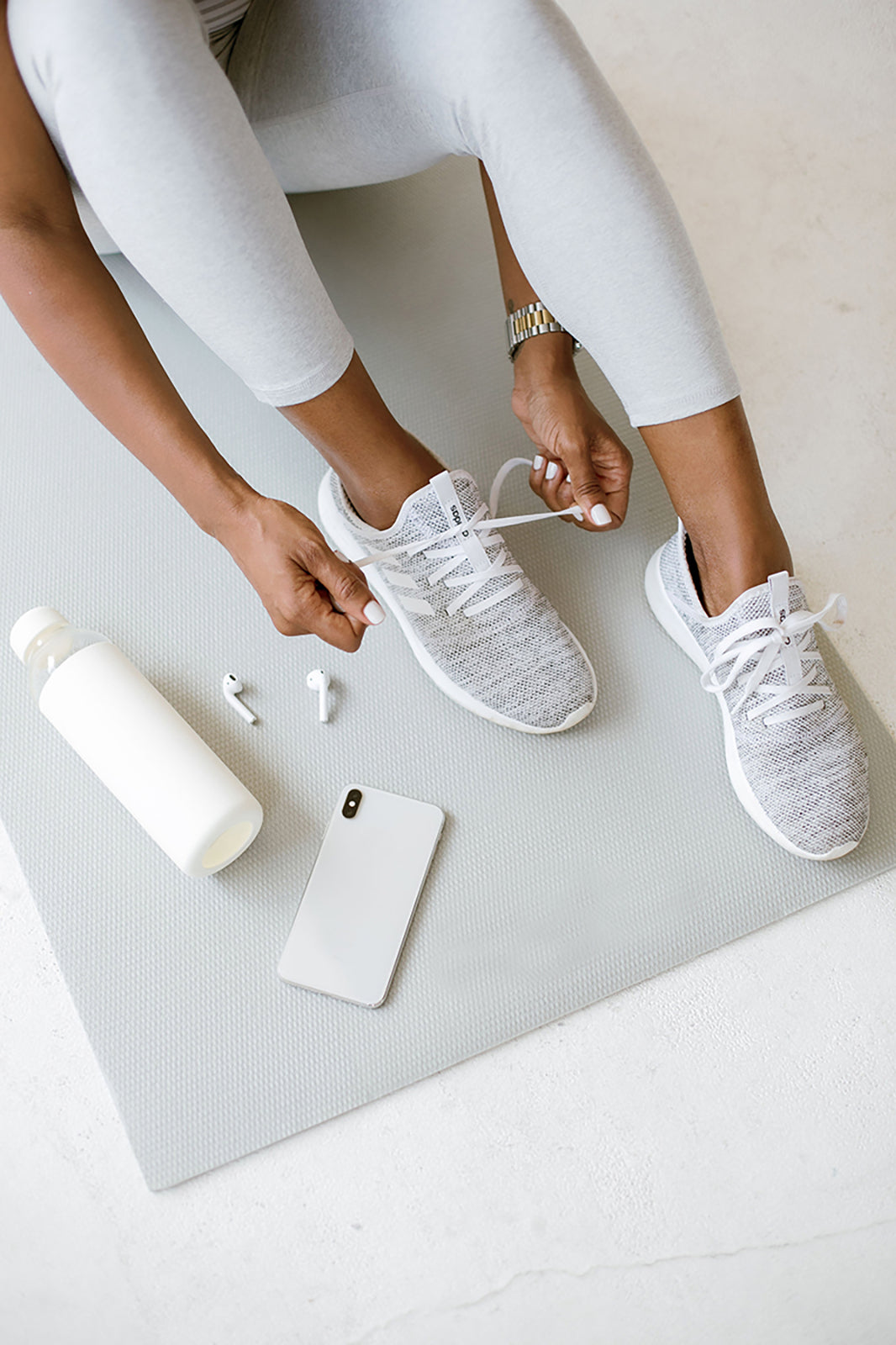

Walking asks almost nothing of you: no gym, no gear beyond decent shoes. It's also one of the best-studied ways to stay healthy as you age. Here's how to start and build a habit that lasts.
Written by Vita Globe Editorial Team | Reviewed against CDC physical activity guidelines and peer-reviewed research
How much should you walk after 50?
U.S. guidelines recommend at least 150 minutes of moderate activity a week, such as brisk walking for 30 minutes on five days, plus two days of muscle strengthening and, for older adults, balance activities[1][2]. In a large pooled analysis, adults 60 and over saw the drop in mortality risk level off at roughly 6,000 to 8,000 steps a day[3].
Caveat: Step studies are observational, so they show associations, not proof that steps alone cause the benefit.
Sources: CDC · Paluch 2022 · Verified 2026-09-28
In this article
Why is walking such a good choice after 50?
Walking is low-impact, free, and easy to scale. You can walk slowly around the block or briskly up a hill. It counts toward the aerobic activity that U.S. guidelines recommend, and it's something most people can keep doing for decades[2].
It also fits naturally into the day. A walk after dinner, a lap of the parking lot, or taking the stairs all add up. The guidelines stress that some activity is better than none and that any amount counts[2].
How many minutes or steps should you aim for?
The CDC's target for adults 65 and older is the same aerobic goal as younger adults: at least 150 minutes a week of moderate-intensity activity, like brisk walking, along with two days of muscle-strengthening and regular balance work[1].
If you prefer counting steps, a 2022 meta-analysis of 15 cohorts found that more daily steps were linked to lower risk of death, and that for adults 60 and older, the benefit leveled off at roughly 6,000 to 8,000 steps a day. For younger adults it leveled off at about 8,000 to 10,000[3]. You can read more in our post on how many steps you really need.
"Moderate" means you can talk but not sing. If you can belt out a chorus, pick up the pace a little.
What does a simple 8-week walking plan look like?
Start where you are, not where you think you should be. This plan assumes you can comfortably walk 10 minutes today.
| Weeks | Walks per week | Minutes per walk | Focus |
|---|---|---|---|
| 1–2 | 4–5 | 10–15 | Easy pace, build the habit |
| 3–4 | 5 | 15–20 | Add a few brisk minutes in the middle |
| 5–6 | 5 | 20–25 | Mostly brisk, easy warm-up and cool-down |
| 7–8 | 5 | 30 | Brisk pace: you've hit 150 minutes a week |
If a week feels hard, repeat it. Progress is progress. Two strength days (bodyweight squats to a chair, wall push-ups, step-ups) round it out.
How do you keep your knees and feet comfortable?
- Shoes: choose supportive, cushioned walking shoes and replace them when the soles are worn.
- Surface: flat paths, tracks and trails are gentler than steep hills when you're starting out.
- Warm up: the first five minutes at an easy pace lets stiff joints loosen.
- Soreness rule: mild achiness that fades within a day is fine. Sharp pain, swelling, or pain that changes how you walk is a signal to back off and get it checked.
For people with knee osteoarthritis, exercise is one of the most strongly supported approaches for pain and function[4]. More in our guide to low-impact exercise for achy knees.
The honest summary
- Aim for 150 minutes of brisk walking a week, built up gradually.
- For adults 60+, around 6,000–8,000 steps a day is where research saw benefits level off.
- Add two strength days and some balance work.
- Good shoes and a gradual start do more for your joints than any supplement.
How do you make walking a habit that sticks?
Attach your walk to something you already do: after breakfast, after the school run, after dinner. Walk with a friend or a podcast. Keep shoes by the door. Track your minutes on a calendar or phone so you can see the streak grow. On bad-weather days, walk a mall, a big store, or do laps of your house.
Our option
Vita Globe Strength & Mobility Bundle
Two gummies, one simple routine: Turmeric, Ginger & Black Pepper (250mg turmeric extract standardized to 95% curcuminoids, 12mg ginger root extract and 100mcg black pepper extract per 2-gummy serving) and Magnesium Citrate (70mg magnesium per serving, 17% DV). Suggested use is 2 of each daily, turmeric preferably with a meal. It's an optional extra for people building a walking habit, not a substitute for the walking itself.
Frequently asked questions
Is walking enough exercise after 50?
Brisk walking can cover the aerobic part of the guidelines, but adults still need two days of muscle strengthening, and older adults benefit from balance activities too[1].
Is it better to walk fast or walk longer?
In one large U.S. study, total daily steps were linked to lower mortality, while stepping pace added little once total steps were accounted for[5]. For most people, more total walking is the priority.
Do I need 10,000 steps a day?
Not necessarily. For adults 60 and older, the benefit in pooled data leveled off around 6,000 to 8,000 steps a day[3].
What if walking hurts my knees?
Start with shorter, flatter walks and supportive shoes. If pain is sharp, causes swelling or persists, see a doctor or physical therapist.
Should I walk every day?
Walking most days is fine for most people. Mixing in easier days helps if you feel sore or tired.
Sources
- Centers for Disease Control and Prevention. Physical activity guidelines for older adults. https://www.cdc.gov/physical-activity-basics/guidelines/older-adults.html
- Piercy KL, Troiano RP, Ballard RM, et al. The Physical Activity Guidelines for Americans. JAMA. 2018;320(19):2020-2028. doi:10.1001/jama.2018.14854
- Paluch AE, Bajpai S, Bassett DR, et al. Daily steps and all-cause mortality: a meta-analysis of 15 international cohorts. Lancet Public Health. 2022;7(3):e219-e228. doi:10.1016/S2468-2667(21)00302-9
- Fransen M, McConnell S, Harmer AR, et al. Exercise for osteoarthritis of the knee. Cochrane Database Syst Rev. 2015;1:CD004376. doi:10.1002/14651858.CD004376.pub3
- Saint-Maurice PF, Troiano RP, Bassett DR, et al. Association of daily step count and step intensity with mortality among US adults. JAMA. 2020;323(12):1151-1160. doi:10.1001/jama.2020.1382
About the Vita Globe Editorial Team
The Vita Globe Editorial Team researches and writes our wellness content, working from peer-reviewed research, systematic reviews and guidance from bodies such as the NIH and the FDA. We cite our sources inline and update articles when the evidence changes.
These statements have not been evaluated by the Food and Drug Administration. This product is not intended to diagnose, treat, cure, or prevent any disease. This article is for informational purposes only and is not a substitute for medical advice. Talk to your healthcare provider before starting any new supplement, particularly if you are pregnant, nursing, taking medication, or caring for a child.