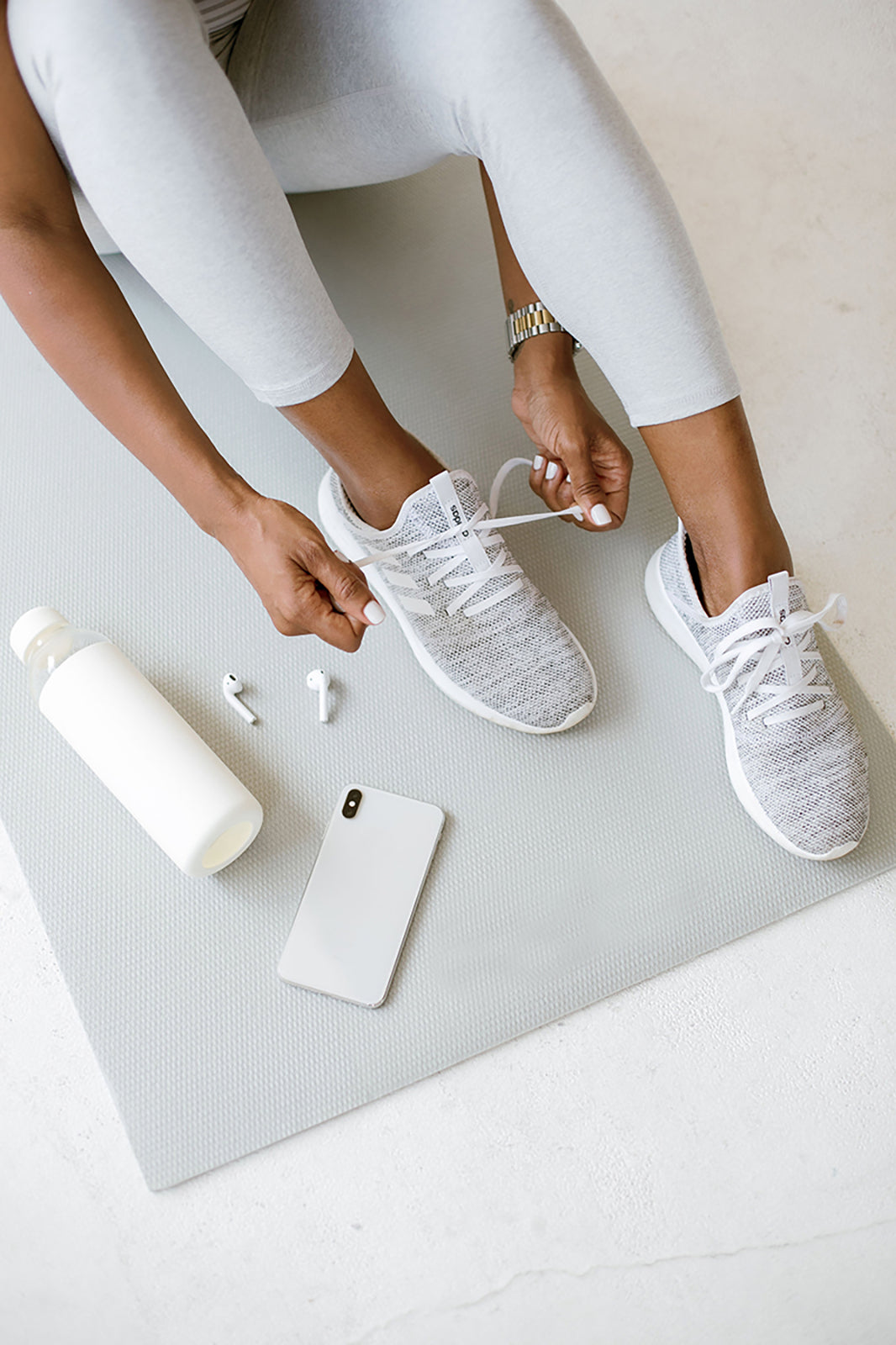

Early birds swear by 6 a.m. workouts. Night owls say they're stronger after work. Both can be right, because over months of training the best time is usually the one you'll repeat.
Written by Vita Globe Editorial Team | Reviewed against systematic reviews and meta-analyses on exercise timing and sleep, plus CDC guidance
Is it better to work out in the morning or at night?
For long-term results, it doesn't seem to matter much. A 2019 meta-analysis found that strength and muscle gains were similar whether people trained in the morning or evening[1]. Evening exercise generally doesn't hurt sleep, although vigorous sessions ending within about an hour of bedtime might[2].
Caveat: Some people do perform slightly better later in the day in a single session, and your body adapts somewhat to the time you usually train, so consistency helps.
Sources: Grgic 2019 · Stutz 2019 · Verified 2026-09-28
In this article
Does workout time affect strength and muscle gains?
A 2019 systematic review and meta-analysis compared resistance training in the morning versus the evening. It found that increases in strength and in muscle size were similar between morning and evening groups[1]. The review also noted that people may perform best when tested at the same time of day they usually train, which suggests your body adapts to your routine[1].
So if you've been told you're "wasting" morning workouts, the evidence doesn't support that.
Will working out at night ruin your sleep?
Probably not. A 2019 meta-analysis of 23 studies concluded that evening exercise does not impair sleep overall and may even slightly increase deep (slow-wave) sleep[2]. The exception: vigorous exercise ending one hour or less before bed may make it take longer to fall asleep and reduce sleep time and efficiency[2].
If you train hard at night, try finishing at least an hour before bed and give yourself a short wind-down. See our guide on how much sleep athletes need.
How do you choose the best time for you?
| Morning workouts may suit you if… | Evening workouts may suit you if… |
|---|---|
| Your evenings are unpredictable | You feel stiff or low-energy early |
| You like getting it done before the day takes over | You want training to be a stress release after work |
| You can still get enough sleep going to bed earlier | You can finish hard sessions at least an hour before bed |
Whatever you pick, the goal is to meet the CDC baseline of 150 minutes of moderate aerobic activity and 2 strength days a week[3], week after week.
The honest summary
- Morning and evening training produce similar long-term strength and muscle gains.
- Evening exercise is generally fine for sleep; avoid very hard sessions right before bed.
- Training at a consistent time may help you perform best at that time.
- The best time is the one you'll stick with.
Does it matter when you take creatine or B12?
Less than you might think. In a small four-week study, taking creatine after workouts looked slightly better than before for body composition, but the differences were modest[4]. The ISSN's position is that daily intake over time is what raises muscle creatine stores[5]. Take it at a time you'll remember; our post on the best time to take creatine goes deeper.
B12 timing is flexible too; see the best time to take B12.
Our option
Vita Globe Performance & Recovery Duo
The Performance & Recovery Duo pairs Sugar-Free Creatine Gummies (creatine monohydrate; suggested use is four gummies once daily) with Vitamin B12 Gummies for Adults (1,000mcg of B12 per two-gummy serving). Every product in the bundle is tested by an independent third-party lab. Morning or evening, pick one time of day for both and keep it consistent.
Frequently asked questions
Is it better to lift weights in the morning or evening?
For long-term strength and muscle gains, research finds them similar[1]. Choose the time you can keep.
Is it bad to work out right before bed?
Moderate evening exercise is generally fine, but vigorous exercise ending within about an hour of bedtime may affect how fast you fall asleep[2].
Are you stronger in the evening?
Many people perform a bit better later in the day, but training regularly at one time of day may help you perform best at that time[1].
Does fasted morning exercise burn more fat?
Fasted exercise increases the fat you burn during the session[6], but that doesn't necessarily mean more fat loss over time. See should you eat before a morning workout.
Should I take creatine before or after my workout?
Either works. Consistent daily intake matters most[5], and pre vs. post differences in research have been small[4].
Sources
- Grgic J, Lazinica B, Garofolini A, Schoenfeld BJ, Saner NJ, Mikulic P. The effects of time of day-specific resistance training on adaptations in skeletal muscle hypertrophy and muscle strength: a systematic review and meta-analysis. Chronobiol Int. 2019;36(4):449-460. doi:10.1080/07420528.2019.1567524
- Stutz J, Eiholzer R, Spengler CM. Effects of evening exercise on sleep in healthy participants: a systematic review and meta-analysis. Sports Med. 2019;49(2):269-287. doi:10.1007/s40279-018-1015-0
- Centers for Disease Control and Prevention. Adult Activity: An Overview. Physical Activity Basics. cdc.gov
- Antonio J, Ciccone V. The effects of pre versus post workout supplementation of creatine monohydrate on body composition and strength. J Int Soc Sports Nutr. 2013;10:36. doi:10.1186/1550-2783-10-36
- Kreider RB, Kalman DS, Antonio J, Ziegenfuss TN, Wildman R, Collins R, et al. International Society of Sports Nutrition position stand: safety and efficacy of creatine supplementation in exercise, sport, and medicine. J Int Soc Sports Nutr. 2017;14:18. doi:10.1186/s12970-017-0173-z
- Aird TP, Davies RW, Carson BP. Effects of fasted vs fed-state exercise on performance and post-exercise metabolism: a systematic review and meta-analysis. Scand J Med Sci Sports. 2018;28(5):1476-1493. doi:10.1111/sms.13054
About the Vita Globe Editorial Team
The Vita Globe Editorial Team researches and writes our wellness content, working from peer-reviewed research, systematic reviews and guidance from bodies such as the NIH and the FDA. We cite our sources inline and update articles when the evidence changes.
These statements have not been evaluated by the Food and Drug Administration. This product is not intended to diagnose, treat, cure, or prevent any disease. This article is for informational purposes only and is not a substitute for medical advice. Talk to your healthcare provider before starting any new supplement, particularly if you are pregnant, nursing, taking medication, or caring for a child.